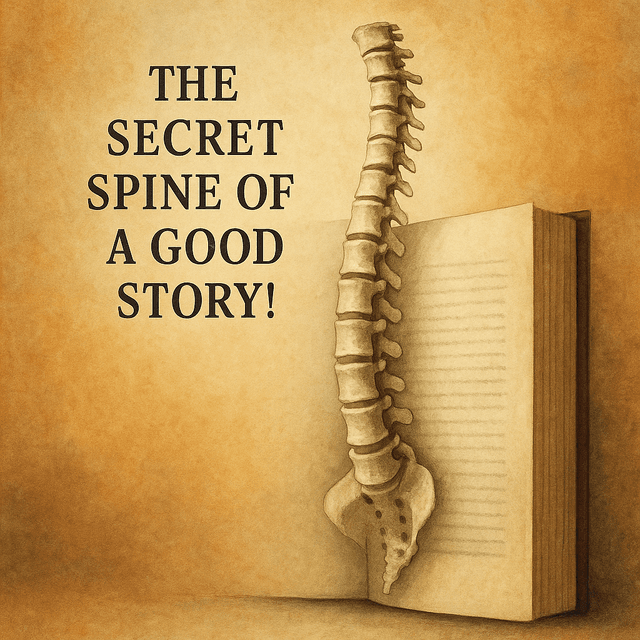
The Secret Spine of a Good Story!
5 Things That Make Readers Turn the Page
Long long ago, before stories had genres or publishing formats, there was only one rule every storyteller followed — keep them listening. Whether it was a grandmother by the fire, a poet under the moon, or an author behind a desk, every storyteller has always sought the same magic: To make the reader turn the page. But what makes that happen?
Why do some stories pull us into their worlds effortlessly while others lose us halfway through? At Dastan Publications, we’ve lived and breathed stories long enough to know one truth — there is no formula to a good story, but there are five invisible threads that hold one together. These threads make up what we like to call the Secret Spine of a Story. Let’s unfold them one by one.
1. A Heart That Feels
Before anything else, a story must feel alive. The reader should sense a heartbeat beneath the words — something real, raw, and human. We’ve all read books whose plots were interesting but never moved us. And then there are stories where even a simple sentence lingers, because it carries an emotion that feels honest. Whether it’s love or loss, courage or confusion — the emotion must be lived, not manufactured. The best stories don’t tell you how to feel — they remind you that you can. So, when you sit to write, don’t chase cleverness. Chase the truth. The reader’s heart always knows the difference.
2. Characters That Breathe
A great story doesn’t have characters; it has people. They have flaws, quirks, contradictions, and layers. They make mistakes, dream big, and surprise even their own authors. We have always believed that a character becomes real when they start disobeying the writer. That’s when you know you’ve given them life. Readers don’t fall in love with perfect people. They fall in love with the ones who feel like mirrors — messy, confused, and achingly real. So, let your characters breathe. Let them change, stumble, and grow. Because in their imperfections lies the reader’s reflection.
3. Conflict That Burns, But Doesn’t Blind
Every story needs tension — that beautiful ache between “what is” and “what could be.” But conflict doesn’t always mean battle scenes or heartbreak. It can be as subtle as a choice, a silence, or a truth left unsaid. The purpose of conflict is not to create noise, but movement. It’s what pushes the story forward, what makes the reader whisper, “what happens next?” The most memorable conflicts are not fought with swords — they’re fought within hearts. A good story’s fire doesn’t burn the reader; it warms them toward understanding.
4. Rhythm That Flows
Every story has a rhythm — a music hidden in its sentences. It’s not about rhyme or meter, but about how the story moves. A well-written tale breathes; it pauses, races, softens, and swells. The pacing should match the emotion — fast when the heart runs wild, slow when the soul needs to listen. Readers may not notice rhythm consciously, but they feel it. It’s what keeps them reading at midnight, forgetting the world around them. So read your story aloud. Listen to its pulse. If it flows like a song, you’ve found your rhythm.
5. Meaning That Lasts
Long after the story ends, what remains? A good story is not just read — it’s remembered. It leaves behind a whisper, a thought, a slight shift in how we see the world. It doesn’t need to have a grand moral. Sometimes, all it needs is a quiet truth — that love can heal, that courage hides in ordinary people, that endings can be beautiful too. Every great story gives the reader not just entertainment, but an echo — something that lingers after the last page. Meaning is the soul of storytelling. It’s what makes readers feel seen.
The Invisible Spine
When these five threads — heart, character, conflict, rhythm, and meaning — come together, they form the invisible spine that holds a story upright. You can dress it in any genre, write it in any language, tell it to any audience — but without this spine, the story collapses.
And here’s the secret: no two spines are alike.
Each story finds its own balance, its own beat, its own truth. So, dear storyteller — don’t look for a formula. Instead, listen for your story’s heartbeat. Trust the rhythm in your words, the truth in your experiences, and the meaning that only you can see. Because somewhere out there, a reader is waiting to turn your next page — and find a little piece of themselves hidden within it.
At Dastan Publications, we believe stories are living beings — growing, evolving, and breathing through every writer and reader who touches them.
If you’re crafting your own tale, may these five threads guide you — not as rules, but as whispers from one storyteller to another.
Because stories, like people, are never perfect. They’re just beautifully alive.